The natural fibre that returns every summer, with increasing product value
Raffia has become one of the key materials for spring-summer accessories. Although it has traditionally been associated with beachwear, today it appears in bags, hats and small accessories with a much more sophisticated interpretation: natural, artisanal, lightweight and versatile.
Beyond the beach bag
In recent seasons, brands have reinterpreted raffia beyond the classic beach bag. We now see it in structured shapes, combined with leather, finished with metal details, crafted handles or more urban silhouettes. This evolution allows the material to enter collections that are not only designed for holidays, but also for the city, adding texture and an artisanal touch without losing elegance.
New silhouettes for bags
In bags, current trends move in two main directions. On the one hand, spacious and functional pieces such as totes, shoppers or hobo bags, where raffia brings lightness and visual volume. On the other hand, smaller and more refined designs, conceived as complements to summer, occasionwear or resort looks. The key lies in balancing a natural-looking raw material with carefully considered finishes that elevate the perception of the product.
Hats: aesthetics and functionality
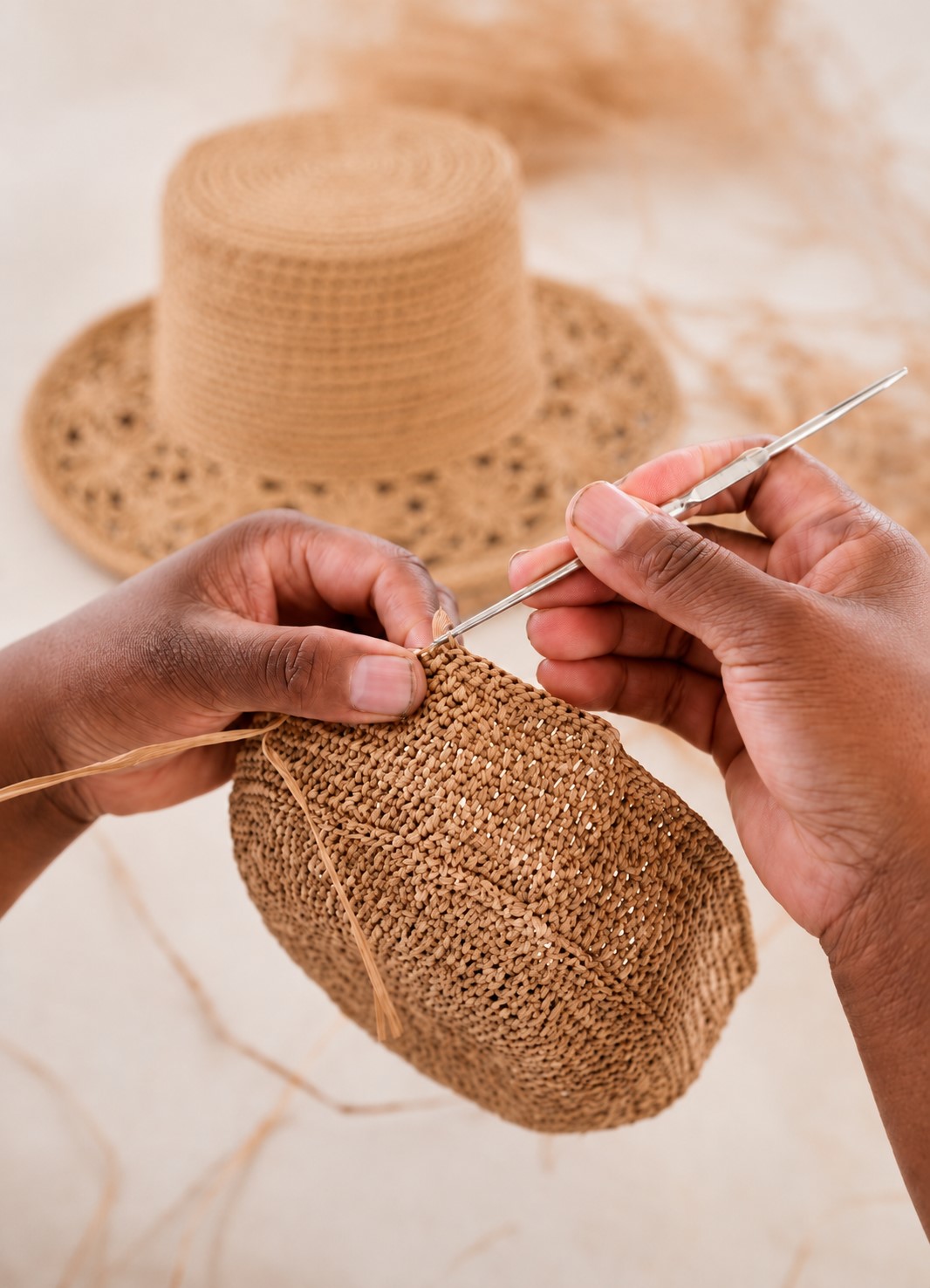
In hats, raffia remains strong for both aesthetic and functional reasons. Its lightness, texture and ability to create generous shapes make it an ideal option for wide-brimmed hats, bucket hats or more artisanal silhouettes.
A natural fibre with a responsible narrative
From a sustainability perspective, raffia can be an interesting alternative within accessory collections due to its natural origin, lightness and connection with artisanal processes. In addition, when developed with the right suppliers, it allows brands to create pieces with less dependence on synthetic materials and with an aesthetic aligned with the growing interest in plant-based fibres, organic textures and products with longer-lasting visual appeal.
Opportunities from a product development perspective
From a product development perspective, raffia offers several interesting opportunities for brands: it allows collections to embrace a more natural narrative, introduces texture without the need for strong prints and adapts well to both casual and premium positioning. It also combines particularly well with linen, cotton, leather, denim, embroidery and neutral tones, making it easy to integrate into summer collections.
Material, craftsmanship and identity
The trend also connects with a growing sensitivity towards materials with a more organic appearance and processes with artisanal value. Raffia is perceived as light, flexible and linked to handwoven techniques, an aspect increasingly appreciated by brands looking to differentiate their accessories through recognisable materials, a strong identity and a more responsible narrative.
The challenge: elevating product perception
For a brand, the challenge is not to treat raffia as a purely seasonal or decorative resource, but as a development base with real potential. The quality of the weave, colour consistency, resistance, interior finishes, combination with other materials and production control are all key factors in ensuring that the final product achieves a more elevated perception.
A trend with long-term potential
Ultimately, raffia bags and hats remain a strong choice for spring-summer, but their evolution points towards more carefully developed, more urban pieces with greater design value. A seemingly simple trend, but one with significant potential when approached through product, the right supplier and a clear brand perspective.